Extended Intelligences II - Speculative Systems with Brain Organoids
Explore Workshop
Syllabus⇝
What futures might emerge from a lab-grown brain? This course invites students to explore brain organoids as speculative provocateurs: living, cognitive agents whose unpredictable neural activity challenges how we interpret, frame, and imagine the world around us. Students will engage with a (mostly) pre-designed digital interface developed by Operating System Studio / Umanesimo Artificiale, which connects to real brain organoid spike data (via Brain Processing Unit API, or Cortical Labs API - collaboration is still pending). This interface transforms neural signals into semantic parameters, feeding them into a custom prompt-generation system powered by an LLM. The result is a cascade of strange, poetic, and speculative questions, invitations to reimagine the worlds embedded in students’ own data collection. A central part of the course is the active collection of real-world, lived data by the students. Through rituals, sensory logs, environmental observation, or embodied tracking (e.g. mood, movement, sound), students create datasets that become stimuli for the organoids. These inputs are then translated into signal formats sent to the biological system, whose neural spike responses generate speculative prompts in return. This creates an evolving feedback process in which students do not simply build speculative worlds, but co-evolve them in collaboration with a nonhuman mind.
Keywords: Brain organoids, Organoid Intelligence, Cognitive Interfaces, Data-Driven Fiction, Posthuman Thought
Learning Objectives⇝
- Understand the fundamentals of brain organoids, organoid intelligence and its creative potential
- Learn how neural spike data can shape language, logic, and worldbuilding scenarios
- Explore critical and poetic frameworks for interpreting nonhuman cognition
- Create artifacts (texts, systems, worlds) shaped through recursive interaction with brain organoids outputs
Schedule⇝
Day 1 - Week 1**⇝
- Overview of brain organoids and organoid intelligence
- Introduction to the digital interface designed by Operating System Studio / Umanesimo Artificiale
- Collective brainstorming on real world data to collect (sound, rituals, mood logs, environments)
Day 2 - Week 2
- First prompt-generation experiments from student-collected input
- Interfacing: feeding stimuli into the system
- Understanding how neural data modulates prompt styles
Day 3 - Week 2
- Use generated questions to begin constructing speculative micro-worlds
- Map unexpected cognitive landscapes from neural activity
- Group critique and reflection: What worldviews does the organoid suggest?
Day 4 - Week 2
- Finalize a short speculative artifact or research fragment (e.g., story, visual piece, cultural fragment, design fiction)
- Presentations + open discussion
Deliverables⇝
- At least one speculative prompt-response artifact per student (text, visual, sound, etc.)
- Final short presentation + reflection
Grading Method⇝
| Percentage | Description |
|---|---|
| 20% | Participation |
| 40% | Creative artifacts |
| 30% | Personal reflections |
| 10% | Self-assessment |
European Credit Transfer and Accumulation System (ECTS)
3 ECTS
Material Needs⇝
- Laptops- Internet access
- Access to the platform (provided by instructors)
- OpenAI or local LLM access
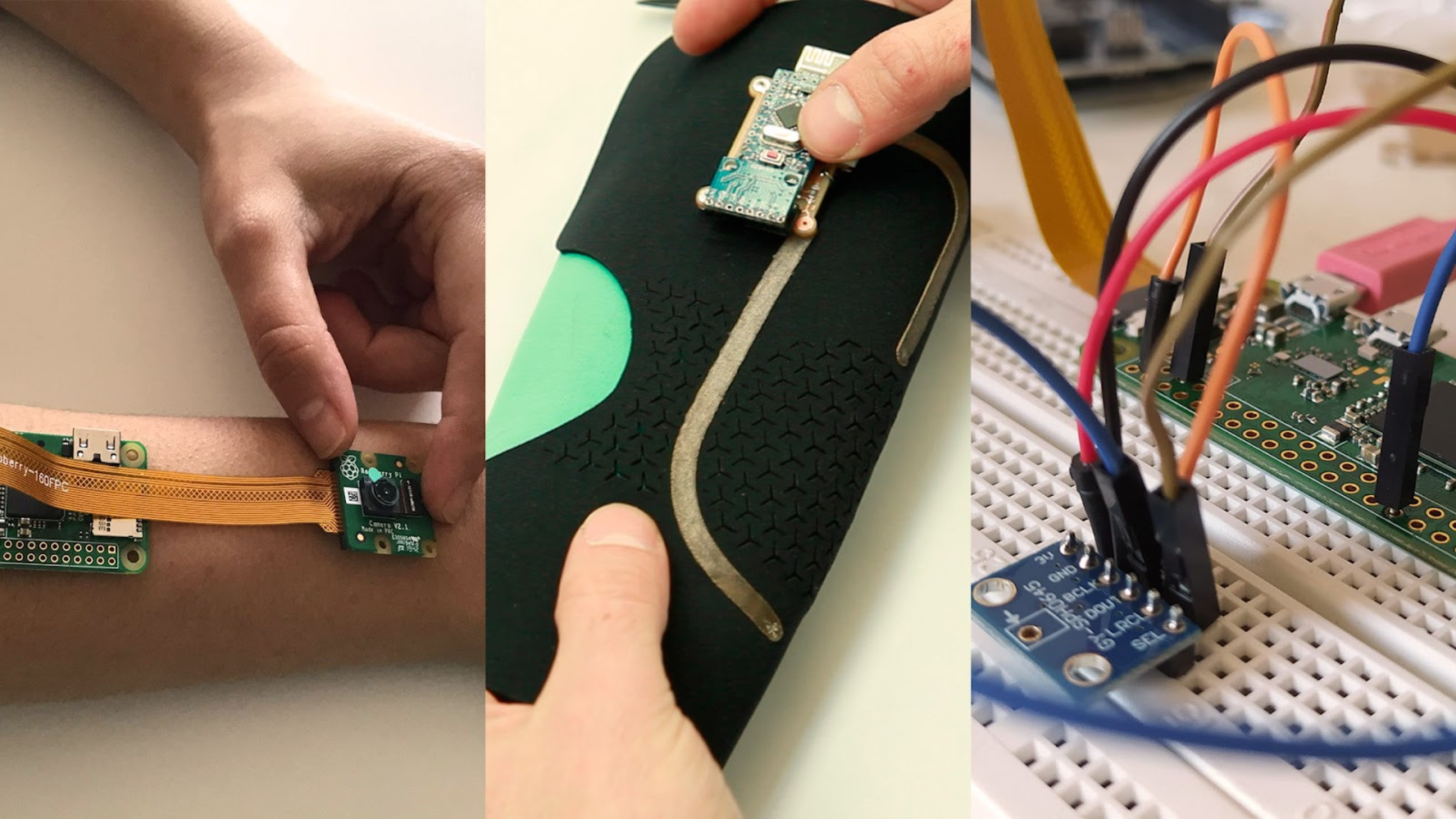
- (Optional) sensor kits for real world data collection
Faculty⇝

Fiona Demeur is an architectural designer with a passion for designing and working with nature to find architectural solutions for the city. She is currently working in the EU Project’s Department as a researcher and managing the Erasmus+ Programmes including Urban Shift.
After completing the Master in Advanced Architecture 02 at IAAC where she developed her thesis on food circularity, she has been involved with two start-ups. The first, eiria, a start-up developed here at IAAC during the BUILDs Programme and formerly known as aeroSQAIR, and secondly add.apt, a start-up based in Lagos, Nigeria formed by IAAC alumni. Both start-ups have been focusing on merging sustainable solutions with technological strategies.